Naming conventions in IMS can be setup for the following entities:
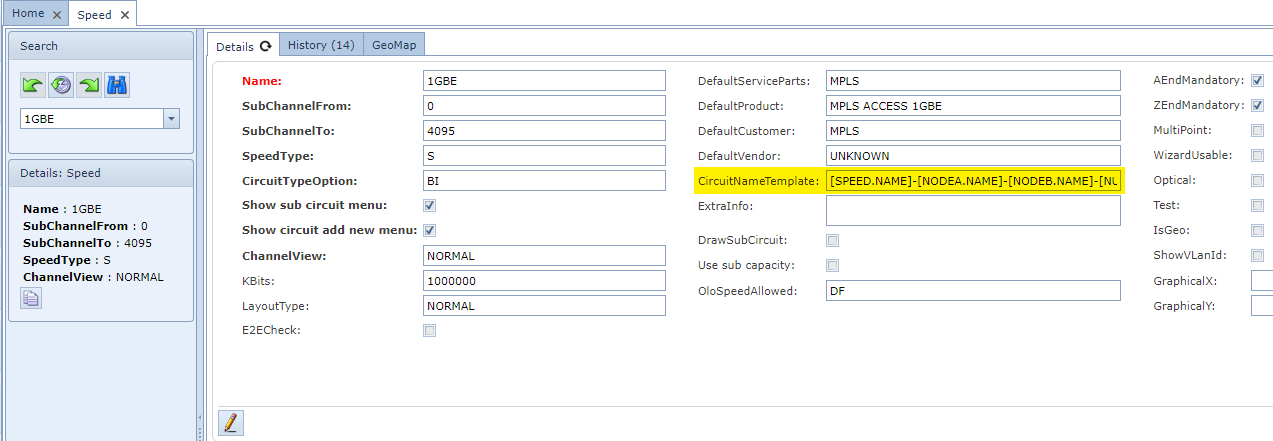
Circuit (Setup in Speed)
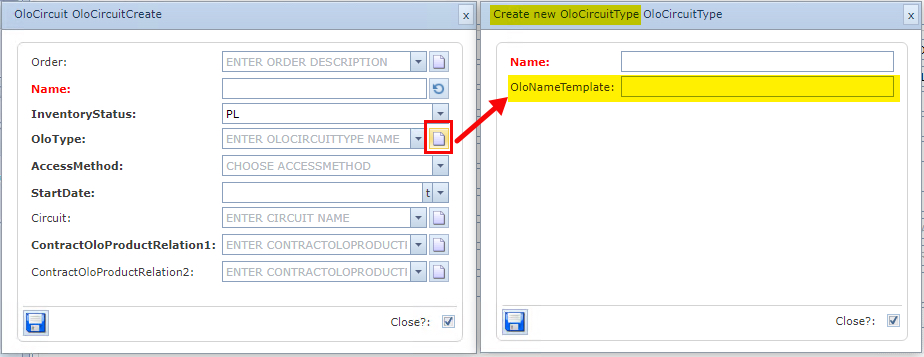
OloCircuit (Setup in OloCircuitType)
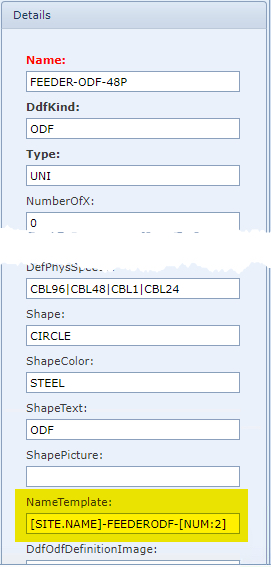
DdfOdf (Setup in DdfOdfDefinition)
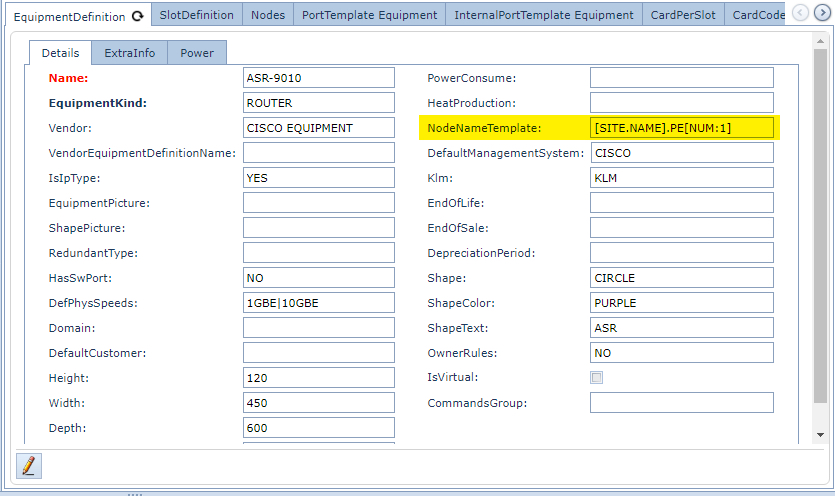
Node (Setup in EquipmentDefinition)
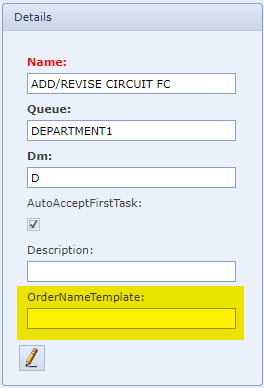
Order (Setup in OrderType)
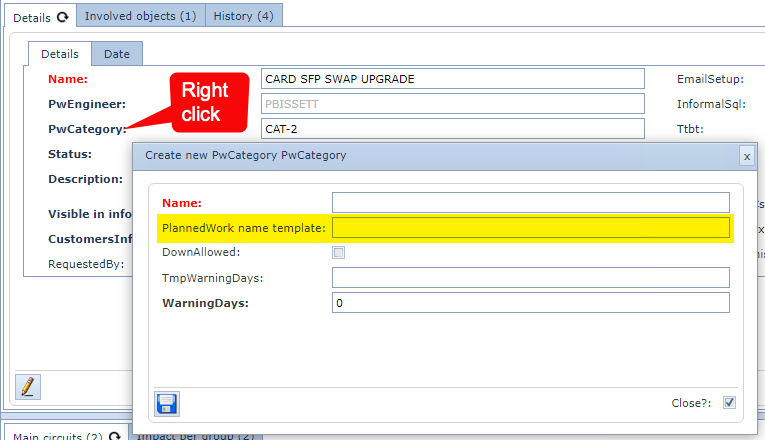
PlannedWork (Setup in PwCategory)
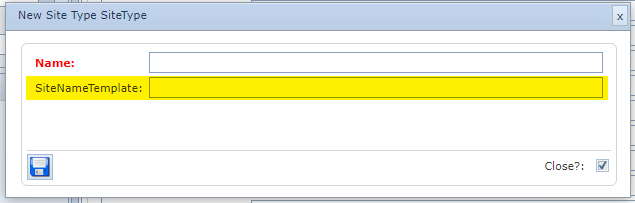
Site (Setup in SiteType)
More naming convention details:
➢All properties of the entity can be used in the naming convention
➢Sequential Numbers setup
[NUM:4:100:7:700:1]
4 =LENGTH OF THE NUMBER STRING.
100 =START OF THE RANGE. (OPTIONAL)
7 =SIZE OF THE STEP WITHIN THE RANGE. (OPTIONAL)
700 =END OF THE RANGE. (OPTIONAL)
for site-related objects
1=0 OR 1 0=COUNT PER SITE (Default)
1=CONTINUOUS COUNTING (OPTIONAL)
or
for city-related objects
1=0 OR 1 0=COUNT PER CITY (Default)
1=CONTINUOUS COUNTING (OPTIONAL)
or
for definition-related objects
1=0 OR 1 0=COUNT PER DEFINITION (Default)
1=CONTINUOUS COUNTING (OPTIONAL)
or
for customer-related objects
1=0 OR 1 0=CONTINUOUS COUNTING (Default)
1=COUNT PER CUSTOMER (OPTIONAL)
➢Current date can be used
[DATEformat]
format can be like yyyy-MM-dd
Check for all options at ...
https://docs.microsoft.com/en-us/dotnet/standard/base-types/custom-date-and-time-format-strings)
➢All data not between brackets is considered a fixed string
Examples:
Site: [CITY.NAME]-[NUM:3]
A new site in London city will be created like LONDON-001
Site: Tower-[CITY.NAME]-[NUM:3:100]
A new site in London city will be created like Tower-LONDON-100
➢Standard Naming Convention Override
The standard naming convention rules can be bypassed by putting double brackets around an entity:
Example
[[AUTH [NUM:5:20000:1:90000]]] [PROPERTYNAME] [NAVIGATIONPROPERTY.PROPERTYNAME] [EXTRAFIELDGROUPNAME.EXTRAFIELDNAME] [NAVIGATIONPROPERTY.EXTRAFIELDGROUPNAME.EXTRAFIELDNAME]
Explanation
[[ |
= Start part of the name that needs to be unique |
]] |
= End part of the name that needs to be unique |
AUTH |
= Plain text |
[NUM:5:20000:1:90000] |
= Number to be generated. In this case a number of 5 digits with a start range of 20000, increment by 1 and an end range of 90000 |
[PROPERTYNAME] |
= property of the entity |
[NAVIGATIONPROPERTY.PROPERTYNAME] |
= property of upper navigation property f.i. [CUSTOMER.NAME] |
[EXTRAFIELDGROUPNAME.EXTRAFIELDNAME] |
= extra field of entity. |
[NAVIGATIONPROPERTY.EXTRAFIELDGROUPNAME.EXTRAFIELDNAME] |
= extra field of upper navigation property f.i. [CUSTOMER. EXTRAFIELDGROUPNAME.EXTRAFIELDNAME] |
Regarding the second last option (extra fields); these are not available yet when the entity is created,
so first create the entity, then enter the extra field values and then update the name.
Entities for which this applies:
oSite
oNode
oDdfOdf
oPlannedwork
oOrder
oCircuit
oOloCircuit