Card Name and Card Code
|
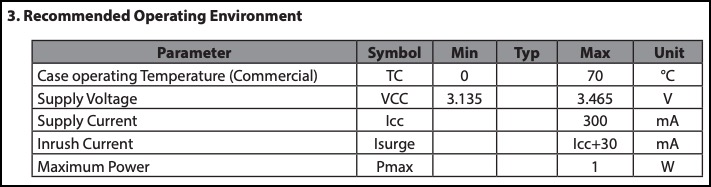
In IMS the Card object is particularly important for both buyers and vendors of cards. A card (or board) may be produced in various configurations, yet still be referred to by their standard names i.e., 10GIGE, OC48, HD-SDI, etc. When it comes to inventory control and commercial interests, it is important to take note of these various configurations. Some of these configurations can be subtle and almost go unnoticed, but if not tracked properly, they can introduce network failures and financial consequences as a result. As an example: Take a look at the specification sheets of the same card product sold in two variations.
The difference is very subtle at first glance, but when placed in the wrong environment it will prove costly in the end, consider also a bulk purchase to be deployed in a very large network. |


With the above in mind, IMS introduces the Card Definition and the Card Code Definition concept. The
Card Code Definition typically contains the card part number which can track the variation. When not
referring to these at the Definition level, they are called Card Name and Card Code instances.
The recommended practice is to create a Card Definition and a related Card Code Definition, the latter
contains the card part-number and should be used when defining equipment.
It is possible to just create a Card Definition only and then deploy them (also referred to as Card names),
but this is not recommended.
If you do find yourself having instances of just Card Definitions in the network and later have the need
to assign variants, don’t worry, as you can still create new Card Code Definitions and simply associate them.
|
|
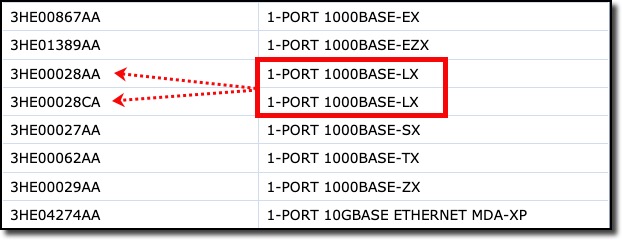
The Card Name 1-PORT 1000BASE-LX viewed from different aspects:
The Card Code Definition screen
The Card Definition screen
